Multiple Pathways of Recovery: Lessons from the New York Forum
If you need immediate support, call or text 9-8-8 any time.
Recorded Live at the Recovery Without Borders (RWOB) New York Forum
At our recent New York Forum, Damien Reilly—founder of Reilly Recovery in Brooklyn—delivered a keynote that landed like a reality check and a relief at the same time. Speaking directly from lived experience, he challenged the outdated narrative that there is only one "right" way to recover.
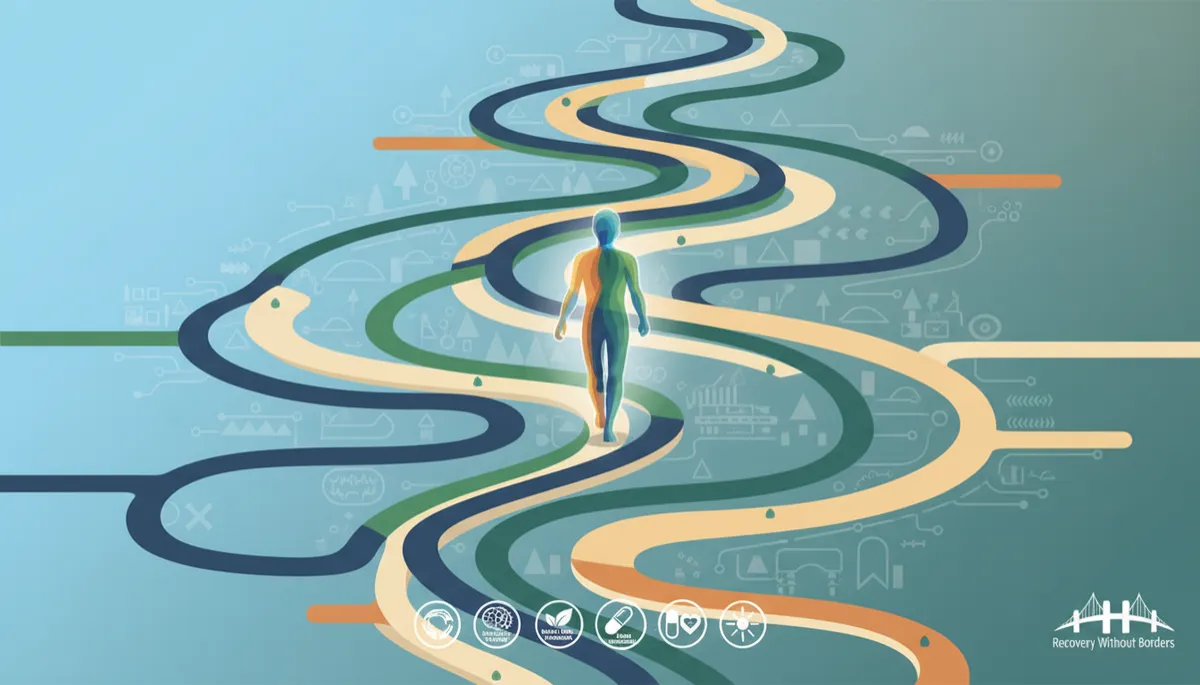
Instead, he mapped out a highly adaptive framework proving that a sustainable lifestyle thrives when you can fluidly combine diverse structural interventions. Recovery is not a single box you must force yourself into; it is a matrix of choices.
Deconstructing the One-Size-Fits-All Myth
For decades, addiction treatment has forced people into a single model. There was usually one sanctioned program, one script for what "real" recovery should look like. If you did not fit that mold, you were often labeled resistant or non-compliant. If the approach failed, the assumption was that you failed, not the system.
Damien's point was straightforward: pretending one pathway works for everyone erases people's stories. It ignores culture, trauma, mental health, and basic survival needs. When we force a one-size-fits-all approach, we fuel enormous community stigma.
The Marathon Mindset: Recovery is not a 30-day sprint. It is a lifelong marathon with hills and valleys. "Success" cannot just mean stopping a behavior; true recovery is about building a sustainable life that actually feels worth staying present for.
Building a Safety Net: Combining Supports
Honoring multiple pathways does not mean chaos. It means building a layered safety net where different modalities work together instead of fighting for territory. In his presentation, Damien details how these supports combine to keep a person stable:
Mutual Support Groups: Fellowships like AA, NA, CA, or SMART Recovery offer daily connection, shared language, and lived-experience accountability.
Clinical Therapy: Professional care to unpack trauma, depression, anxiety, or grief that often sits underneath substance use.
Medication-Assisted Treatment (MAT): An evidence-based pathway to stabilize cravings and withdrawal, giving individuals the physical bandwidth to engage in deeper healing.
Harm Reduction: Pragmatic, dignity-focused strategies that keep people alive and safer today, recognizing that immediate abstinence is not always the starting point.
Faith-Based Practices: Providing deep spiritual grounding, ritual, and community belonging.
How RWOB Provides the Infrastructure
Believing in multiple pathways isn't enough—people need real-world infrastructure so their pathway doesn't collapse the moment a program ends. That is where Recovery Without Borders comes in.
As a global, peer-led ecosystem, we sit alongside clinical care to ensure no one is left without a practical next step. We bring these pathways to life through three core pillars:
Low-Barrier Peer Support: Weekly online city forums (like the New York session) where you can connect across neighborhoods without gatekeeping or cost barriers.
Work Pathways: Entrepreneurship programs designed to bypass traditional employment gaps and stigma.
Housing Frameworks: Clear pathways moving from stabilization toward secure tenancy and rent-to-own models.
Connect with Damien Reilly
Damien Reilly is a Brooklyn-based Recovery Coach, mental health advocate, and the visionary Founder of Reilly Recovery. Operating directly from a powerful integration of professional clinical literacy and authentic lived experience, Damien provides highly compassionate, individualized recovery systems.
Join the Conversation in Our Ecosystem
Whether you are navigating your own substance use, supporting a loved one, or working as a clinician, you don't have to piece things together alone. Join the ongoing discussion about this keynote across our platforms:
Take the Next Step
Ready to get plugged in? Access identity-specific peer groups, or register for free membership to stay updated on upcoming forums.
If you need immediate support, call or text 9-8-8 any time.
